
When people think about solar energy, they often picture rooftop panels or large solar farms. But what if solar panels could do something more, help preserve farmland while generating clean, affordable electricity?
That's exactly what's happening in southeastern Massachusetts, where two cranberry bogs have become the first in the United States to successfully grow cranberries beneath operating solar panels. These innovative projects are demonstrating that agriculture and renewable energy don't have to compete for land—they can thrive together.
A New Way to Use Farmland
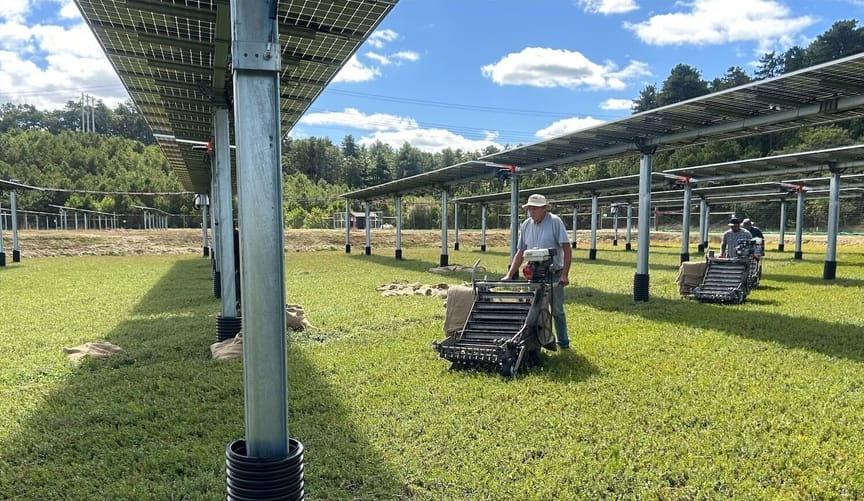
The two agrivoltaic projects combine active cranberry farming with solar energy production. Elevated solar panels are installed high enough for farm equipment to move freely underneath, allowing growers to continue harvesting cranberries while the panels generate clean electricity above.
Designing the projects required close collaboration between engineers and farmers. Solar panels were raised about 10 feet off the ground, support poles were spaced to accommodate harvesting equipment, and electrical wiring was suspended overhead to avoid disturbing the wetland soils where cranberries grow.
The result is a working farm that also produces renewable energy.
Why Agrivoltaics Matter
Across the country, communities are asking an important question: How do we expand renewable energy while protecting valuable farmland?
Agrivoltaics: also known as dual-use solar, offers an answer.
Instead of converting farmland exclusively to energy production, agrivoltaic systems allow the land to serve both purposes. Crops can continue growing, livestock can graze, and farmers can earn additional income while helping produce the clean electricity our communities need.
This approach can strengthen local agriculture by creating new, stable revenue streams that help farms remain financially viable, especially during times of economic uncertainty.
Why We Need More Solar
As electricity demand continues to grow, so does the need for reliable, locally generated clean energy. Solar power helps reduce dependence on fossil fuels, lowers greenhouse gas emissions, improves air quality, and supports a more resilient electric grid.
Building enough renewable energy to meet future demand requires thoughtful planning. While rooftop solar plays an important role, it cannot meet all of our energy needs on its own. Ground-mounted solar projects remain an important part of the solution, and agrivoltaics shows they can be developed in ways that also support agriculture.
Rather than viewing farming and clean energy as competing priorities, projects like these demonstrate they can complement one another.
Lessons for Long Island
Long Island has a long agricultural history, from vineyards and orchards to vegetable farms and nurseries. As New York works toward a cleaner energy future, innovative approaches like agrivoltaics could help preserve working farmland while expanding renewable energy generation.
Every community is different, and not every farm is suitable for dual-use solar. However, projects like the cranberry bogs in Massachusetts remind us that thoughtful design, collaboration with farmers, and community engagement can create solutions that benefit both agriculture and clean energy.
Read the article here: https://www.canarymedia.com/articles/food-and-farms/cranberry-bogs-side-of-solar
 Get Updates!



Showing 1 reaction