

What Is Energy Justice?
Energy justice, sometimes called energy equity, is a core part of the just transition. It focuses on fairness within today’s extractive energy system while helping shape a future rooted in democracy, cooperation, and regeneration. Rather than simply replacing fossil fuels with renewable energy, energy justice asks deeper questions: Who benefits? Who is harmed? And who gets to decide? (Initiative for Energy Justice)
Energy justice recognizes that the current energy system has long created unequal outcomes, especially for low-income communities, communities of color, and other frontline communities. Addressing these inequities is essential to building an energy system that works for everyone—not just a few.
Rather than treating energy as purely a technical issue, energy justice centers people. It prioritizes the voices and needs of marginalized communities and works toward energy systems that are affordable, accessible, clean, and democratically governed. Both practitioners and scholars emphasize that justice in energy isn’t only about outcomes—like lower bills or cleaner air—but also about process: who is included in decision-making and whose knowledge and lived experience are valued.
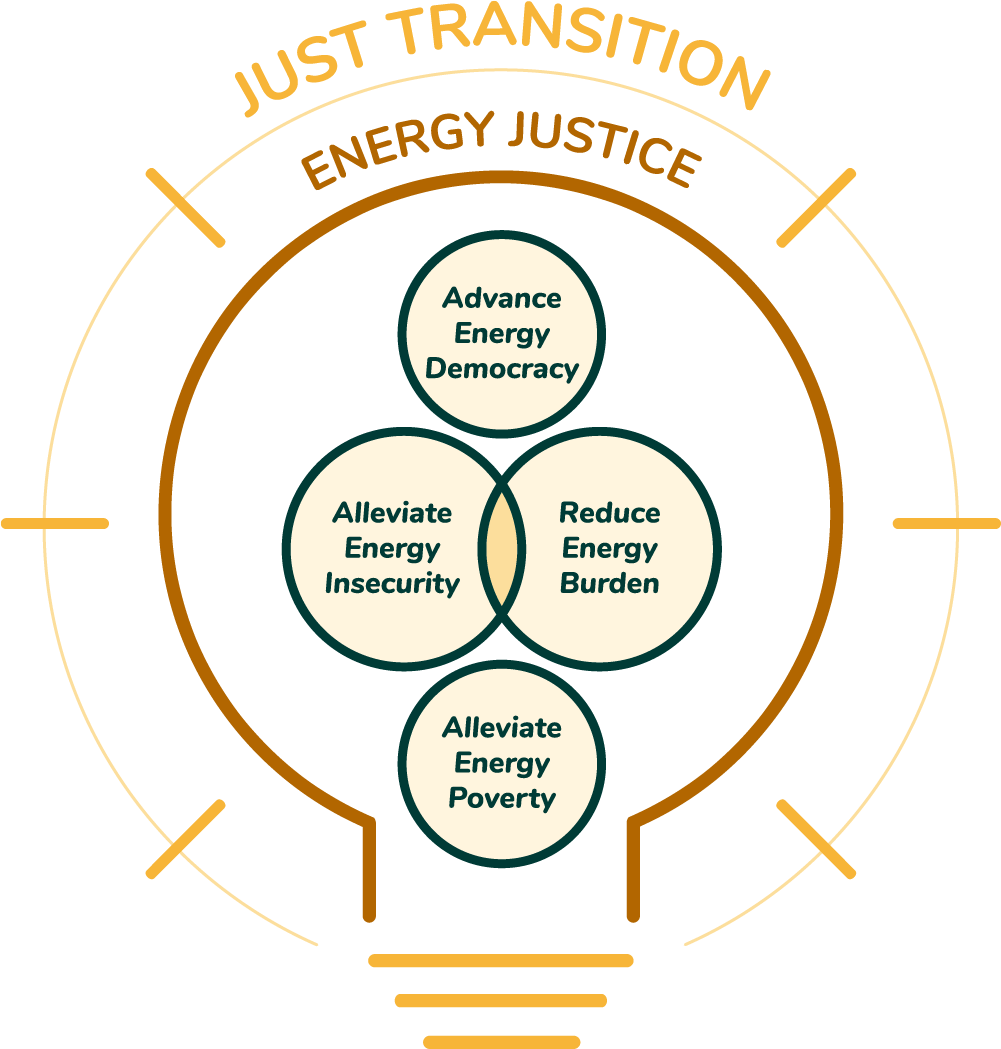
(Initiative for Energy Justice)
Key Dimensions of Energy Justice
Energy justice includes several interconnected issues:
- Energy burden: The share of a household’s income spent on energy costs. High energy burdens force families to choose between paying utility bills and meeting other basic needs.
- Energy insecurity: The day-to-day hardships households face when they struggle to keep the lights on, heat their homes, or avoid utility shutoffs.
- Energy poverty: A lack of reliable access to energy services altogether.
- Energy democracy: The principle that communities should have real power and decision-making authority over their energy future, from where energy is generated to how it is governed.
- Environmental Justice: Recognition and remediation of the disproportionately high and adverse human health or environmental effects on communities of color and low-income communities.
- Just Transition: A transition away from the fossil-fuel economy to a new economy that provides “dignified, productive, and ecologically sustainable livelihoods; democratic governance; and ecological resilience. (Initiative for Energy Justice)
Roots in Environmental and Climate Justice
Energy justice grows directly out of the environmental justice and climate justice movements.
The environmental justice movement, which emerged in the 1980s, exposed how communities of color and low-income communities were disproportionately burdened by pollution, toxic waste, and harmful infrastructure, despite environmental laws meant to protect public health. This movement pushed for fair distribution of environmental benefits and harms, as well as meaningful community participation in environmental decision-making. (Initiative for Energy Justice)
Building on this foundation, the climate justice movement expanded the lens globally. Climate justice highlights how those who have contributed least to climate change, particularly people in the Global South, Indigenous communities, and low-income communities—are facing the most severe impacts. In the United States, climate justice advocates point to how legacies of redlining, segregation, and economic disinvestment make certain communities far more vulnerable to climate disasters, while also limiting their ability to recover.
Over time, these movements have emphasized both:
- Procedural justice: Who is included in decision-making processes
- Distributive justicehttps://pollution.sustainability-directory.com/term/distributive-environmental-justice/: How benefits and burdens are shared.
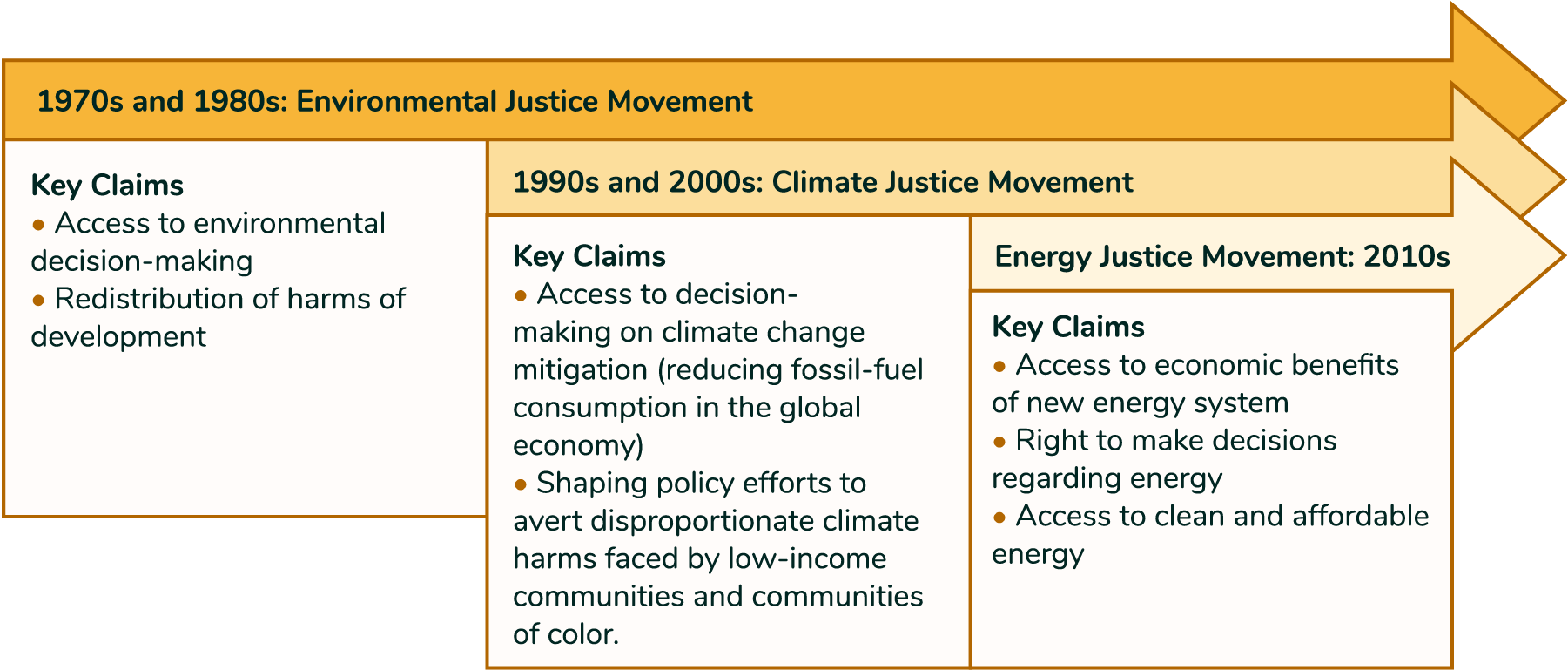 (Initiative for Energy Justice)
More Resources:
 Get Updates!



Showing 1 reaction